
What is nuclear medicine
Nuclear medicine is a medical specialty that uses very small amounts of radioactive substances, known as radiotracers or radiopharmaceuticals, to diagnose or treat certain diseases. These substances remain for a short period of time in specific target areas of the body.
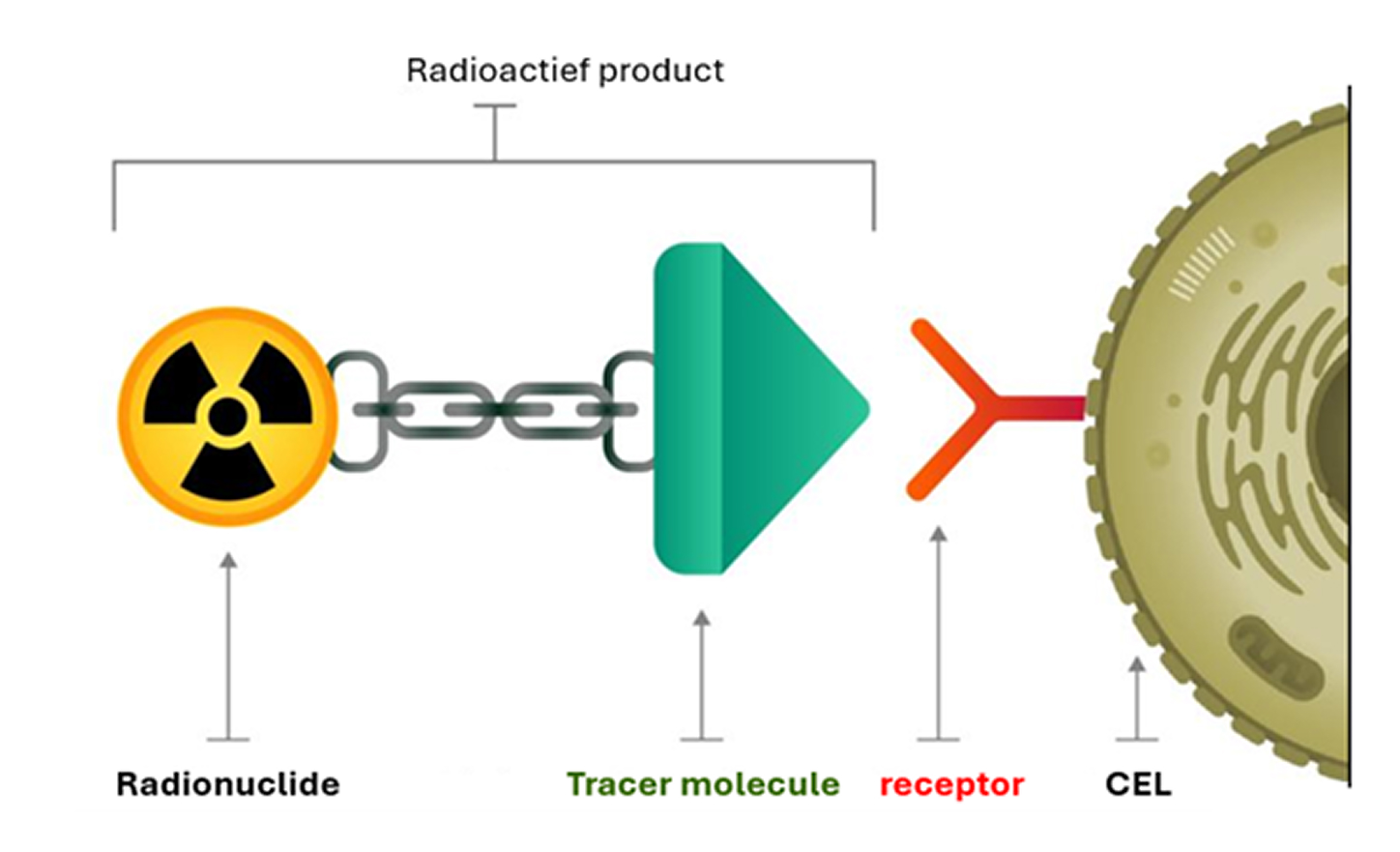

Nuclear medicine can be used for imaging. The radioactive tracer is usually administered by injection (sometimes by inhalation or orally) and accumulates in specific organs. A special camera (such as a PET scanner or a gamma camera) detects the radiation emitted by the tracer and converts it into images that show how the organs function.
Nuclear medicine can also be used to treat certain diseases, particularly some types of cancer and thyroid disorders.
Is nuclear medicine safe?
Yes. The amounts of radioactive tracer used are very small. The radioactivity decreases quickly, and the tracer is naturally eliminated from your body within a few hours or days after the examination.

What is radiation?
Radiation is a form of energy that occurs naturally in our environment (such as sunlight). It can also be produced artificially for medical imaging (for example, X-rays used to take an X-ray image or a scan). This type of radiation is called ionizing radiation.
We are all exposed to ionizing radiation from the ground, the air, and the food we eat—this is known as natural radiation.
Nuclear medicine uses ionizing radiation to look inside the body, similar to an X-ray. The radiation used in nuclear medicine is present in very small amounts and comes from radioactive elements.